

💡 Key Takeaways
- Recognition outperforms pay for driving employee engagement: Aon found underpaid but recognized employees reported 71% engagement, vs. 61% among fairly paid but unrecognized employees.
- Career clarity is the strongest retention tool managers have: employees with regular 1-on-1 growth conversations (monthly or quarterly) are 87% less likely to leave, per the Corporate Leadership Council.
- Small acts of trust → direct engagement gains: assigning meaningful, real work signals that growth matters. That shift turns someone from disengaged to invested.
Employee engagement ideas are strategies employers use to connect work to purpose. And the data shows they directly impact retention, innovation, and performance.
The good news: you don't need a massive budget or a culture overhaul. You need targeted actions that tap into what employees already want.
This article breaks down what employee engagement actually is, the business outcomes it drives, and the specific ideas you can act on right now. No fluff. No vague "culture building" advice.
Just what works, backed by real numbers.
Employee engagement is the emotional commitment employees have toward their organization and its goals. It's what makes someone go beyond the job description. Not because they're told to, but because they actually care.
Let's start with your goals. Every business aspires to outcomes like these:
- Strong culture: Values are clear, and leadership actually stands by them
- Organic innovation: Employees drive improvements without being forced; at both the industry and internal process level
- Ownership mindset: Employees are empowered to solve problems and take action
- High performance: Employees thrive, stay productive, and continuously learn
- Lower hiring costs: Internal mobility increases; external recruiting decreases
- Employer brand strength: Employees speak positively about the company and actually stay
Yes, you guessed it. That's a business with strong employee engagement.
So how do you actually get there? Let's get into the actionable ideas that drive these outcomes.
Employee Engagement Ideas That Actually Drive Results
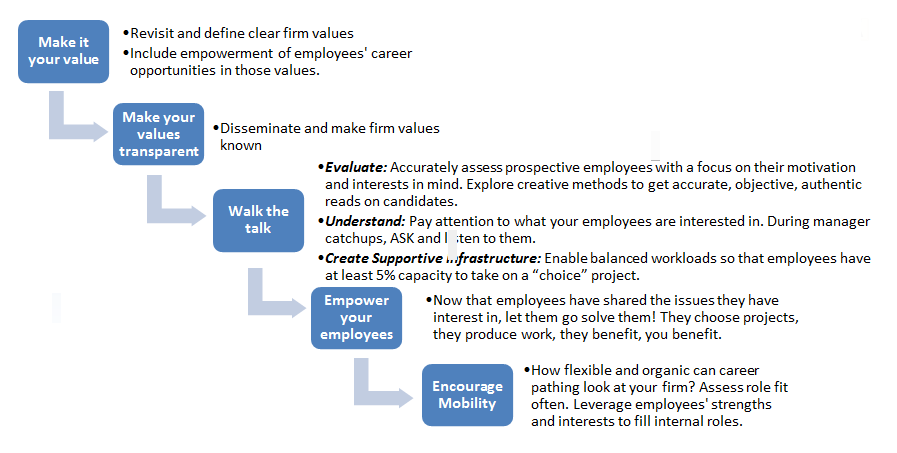
The highest-impact employee engagement ideas aren't just about recognition programs or perks. They start with something more fundamental: giving employees a clear picture of where they're going inside your organization.
When someone can see a real path forward, they stop looking elsewhere. That means specific growth conversations with their manager, monthly goals, and a clear sense of what it takes to advance.
Recognition Beats Compensation
Here's the counterintuitive finding: recognition outweighs pay. Aon's research found that underpaid but recognized employees reported 71% engagement. That compares to just 61% among employees paid fairly but not recognized.
Read that again. People who weren't paid fairly but felt seen were MORE engaged than people who were compensated well but ignored. That should change how you prioritize your time as a leader.
If you follow this process, you'll see engaged employees who thrive, stay productive, continuously learn, and actually want to tout your brand. As they work on issues they care about, they'll drive business innovation organically.
Career Development Is the Top Retention Driver
Here's the retention case: McKinsey research found that the top reason employees quit is a lack of career development and advancement, at 41%. WOKEN's B2B employee engagement and career development programs are designed to address exactly this gap.
And here's what makes this harder to ignore: most employees won't tell you when they've stopped caring. They'll just start looking. Globally, disengagement costs the world economy $438 billion in lost productivity.
These employee engagement ideas only work if employees actually know where they're going inside your organization. That means individual conversations — not just group check-ins.
Ask about their goals, what they want to grow into, and what's feeling misaligned. Tools like WOKEN's career path exploration resources can help employees and managers structure these conversations.
Monthly or quarterly is the right cadence. Not once a year. When someone has a clear path in front of them and a manager who's actively helping them see it, they stop looking elsewhere.
Career clarity isn't just good for the employee; it's your strongest retention tool. By focusing on them, you're focusing on you. They reap the reward of engagement — and you benefit through retention, reputation, and results.
What This Looks Like in Practice
Case in point: my manager tasked me with writing this post, and my short-term experience at Aon improved because of it. You're reading work I produced during my time here. This article wouldn't have happened otherwise.
That's engagement in action. One small assignment. One moment of trust.
And it changed my experience.
If you want to know where to start, try this: set up a dedicated 1-on-1 with each person on your team. Don't talk about project status — talk about where they want to go.
Ask them about career path clarity, what's next for them, and what they need to get there. For a deeper look at how employees can clarify their direction, see deciding your career path: how to make the right next move.
Monthly or quarterly growth conversations are one of the most underused employee engagement ideas managers have — yet only 30% of employees feel someone at work encourages their development. It costs nothing. And it signals something most employees rarely hear: that their future here actually matters.
Frequently Asked Questions
What are some good ideas for employee engagement? The highest-impact employee engagement ideas start with career clarity. That means regular 1-on-1 conversations where managers ask about goals, growth, and what feels misaligned — ideally monthly or quarterly, not once a year.
What are the 5 C's of employee engagement? The 5 C's of employee engagement are Care, Connect, Coach, Contribute, and Congratulate. This framework captures the core behaviors managers use to build emotional commitment and keep employees invested.
What are the 4 pillars of engagement? The 4 pillars of employee engagement are growth, recognition, trust, and purpose. When all four are present, employees are more likely to stay, perform at a higher level, and advocate for the organization.
What are 5 areas of improvement for employees? The 5 areas where employees consistently grow are communication, ownership, continuous learning, collaboration, and career development. Managers who actively support these areas through regular feedback and real opportunities see stronger retention and performance.
.png)
Want to chat about your career
with a certified coach?
On this 20-minute coaching call, we'll discuss your career challenges, hesitations, goals, and our suggestions for your next steps.
BOOK FREE CALL


